Address
304 North Cardinal St.
Dorchester Center, MA 02124
Work Hours
Monday to Friday: 7AM - 7PM
Weekend: 10AM - 5PM


Powering the Future of Server Infrastructure
Powering the Future of Server Infrastructure
 Byhyperserver
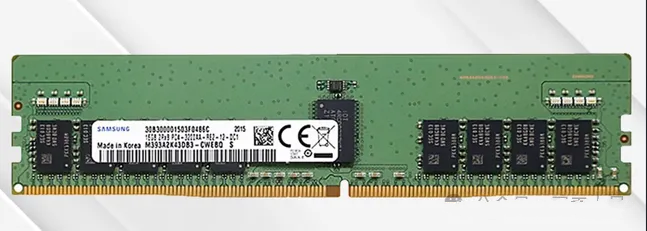
Many people focus only on capacity and frequency when upgrading server memory, while overlooking designations such as 1Rx4, 1Rx8, and 2Rx4. Even when capacity and frequency are identical, these specifications can significantly affect cost, performance, compatibility, stability, and overall server efficiency.
R represents the memory Rank, an independent data transfer region on a DIMM and the primary unit through which memory communicates with the server memory controller. Common server configurations include Single Rank (1R), Dual Rank (2R), and Quad Rank (4R), with 1R and 2R being the most widely used. A dual-rank module can be viewed as intergrating two independent single-rank groups on one DIMM. x4 and x8 represent the data width of each DRAM chip. Standard server memory provides a 64-bit data bus. ECC server memory adds 8 bits for error correction, resulting in a total width of 72 bits.
Non-ECC Memory (64-bit bus):
1Rx4: 64 bits/4 bits per chip = 16 chips
1Rx8: 64 bits/8 bits per chip = 8 chips
ECC Server Memory (72-bit bus):
1Rx4: 72 bits/4 bits per chip = 18 chips
1Rx8: 72 bits /8 bits per chip =9 chips
The higher chip count of 1Rx4 results in denser PCB routing, stronger fault tolerance, and higher stability. 1Rx8 uses fewer chips, resulting in simpler design, lower latency, and lower cost.
1Rx4: Single-rank, x4-width memory. Provides excellent fault tolerance, compatibility, and stability. Commonly used in enterprise servers requiring high reliability.
1Rx8: Single-rank, x8-width memory. Fewer chips, simpler structure, lower latency, and excellent cost-performance ratio. Teh mainstream choice for most servers.
2Rx4: Dual-rank, x4-width memory. Integrates two independent ranks and can provide approximately 5% higher performance in suitable configurations. However, it places higher demands on memory channels and slot population rules.
When only 2-4 DIMMs are installed:
All three specifications can be used. 2Rx4 is generally preferred because its dual-rank design can deliver a modest performance improvement without creating channel contention.
When 6 or more DIMMs are installed:
Avoid excessive use of dual-rank memory. Too many ranks increase scheduling complexity and may raise latency. In fully populated configurations, 1Rx4 or 1Rx8 is generally preferred.
Rank (R) determines the number of memory data groups and affects performance potential and controller scheduling complexity.
x4 and x8 indicate DRAM device width and influence reliability, fault tolerance, latency, and cost.
Recommended choices:
Choosing the correct memory specification helps balance performance, stability, compatibility, and total system cost.